
Which exchange is cheapest depends on what you do. Someone buying €500 of bitcoin a month pays mostly SEPA and spot fees. Someone trading $5 million a month in perpetuals at 70% maker sits in an entirely different part of the ladder — and at some exchanges pays nothing, or earns a rebate.
So this section holds calculators rather than a ranking. The cost comparison uses your volume, your maker/taker split and your deposit method, and shows the real cost per exchange instead of the headline rate. The feature comparison puts sixteen exchanges side by side on licensing, products, collateral and yield. The exchange coin calculator works out what BNB, CRO or BP earns you per year in fee discounts — and what you have to lock up for it.
Alongside those are worked profiles: the best choice for market makers, for Dutch traders and for EU traders generally, including what Dutch tax does to your position.
All fees come from the platforms’ own official schedules, with the date they were checked. No estimates, no affiliate ranking.
Calculate what you really pay
Compare costs, put features side by side or work out what an exchange token earns per year.
Cost calculator
Compare total trading costs for your region, market, volume and order mix.
Open cost calculator Features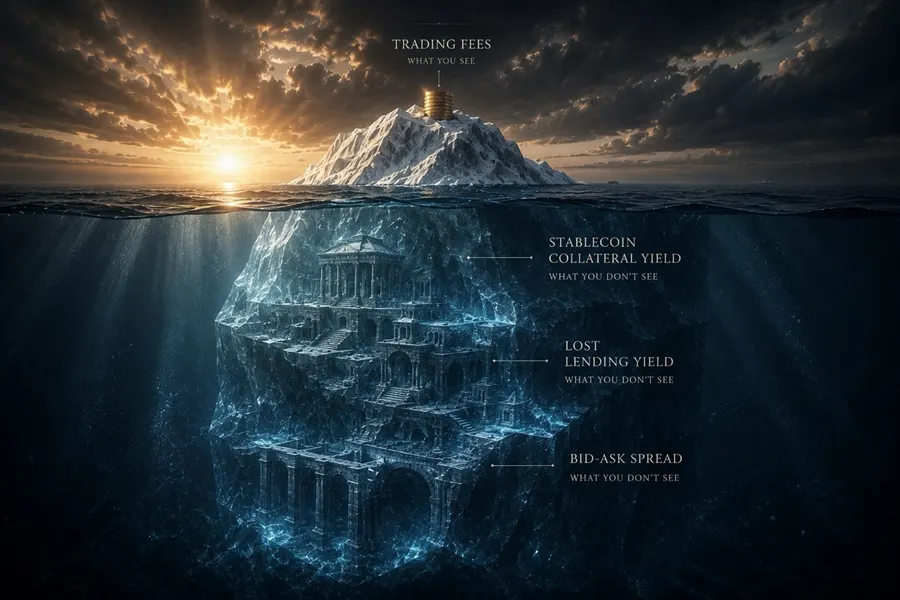
Feature comparison
Put 2–4 exchanges side by side: licences, products, stocks, yield and payments.
Open feature comparison Exchange tokens
Exchange token calculator
Calculate the total fee discount and yield from BP, BNB or CRO for your profile.
Open token calculator
All trader guides
To the comparisonBest exchange for market makers
MM programmes, rebates, API performance and capital costs compared.
6 min readBest exchange for Dutch traders
iDEAL, DNB track record, licences and the winner per use case.
6 min readBest exchange for EU traders
Full licences, lowest true cost and the broadest regulated offering.
7 min readDutch crypto taxes
Box 3, filing and what high-volume traders need to know.
5 min readReady to compare?
You now know how exchanges differ per profile. Compare your real trading costs and see which one fits your volume.
Compare exchanges