They were robbed of the idea behind Facebook, laughed at as Silicon Valley's losers, and written off by Hollywood as spoilt rich kids. Then Cameron and Tyler Winklevoss took their settlement money, bet it on something almost nobody took seriously — bitcoin — and became the world's first bitcoin billionaires. This is the story of the twins who lost to Zuckerberg and won against history. And of the crack in that fairy tale.
Harvard: the idea
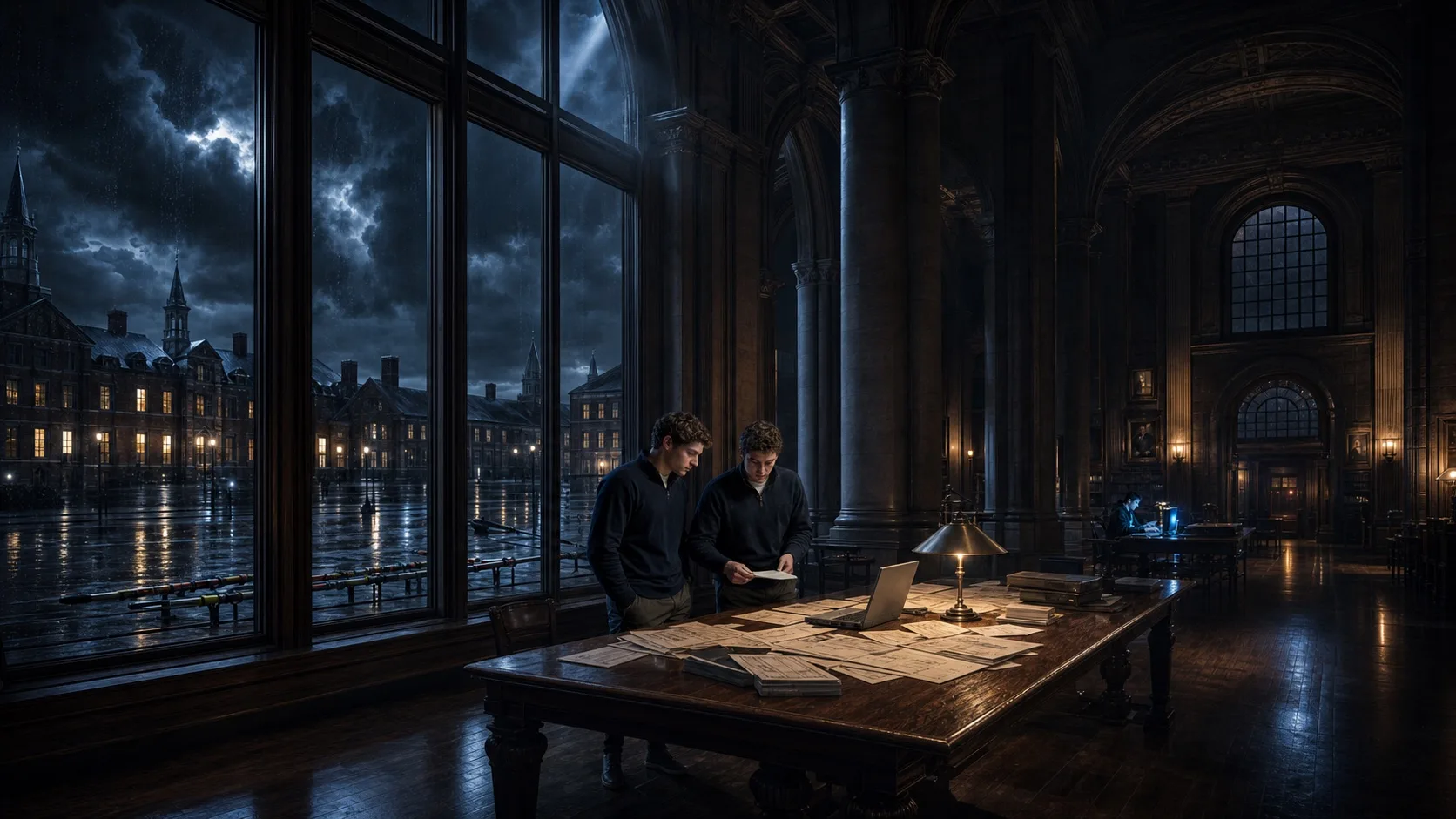
To understand why this is a revenge story, you have to go back to Harvard, 2003. Two identical twin brothers, Cameron and Tyler Winklevoss — tall, athletic, rowers who would later compete for the US at the 2008 Olympics — are working with fellow student Divya Narendra on an idea: a private social network for Harvard students, HarvardConnection (later ConnectU).
The site is nearly finished, but they need a programmer to close it out. They find a sophomore known as a brilliant coder: Mark Zuckerberg. They explain their plan, give him access, and wait for him to finish it.
He does not finish it. He strings them along for weeks with excuses about being busy — and in the meantime launches his own social network. It is called thefacebook.com.
The betrayal
To the brothers it feels like theft in broad daylight. They had the concept, they had had part of the code written, they had let Zuckerberg in — and now they watch their idea, built by their programmer, grow into the fastest-growing company of their generation.
They do what the wronged do: they go to court. In 2004 they sue Zuckerberg for stealing their idea and their source code. It turns into a legal trench war lasting years, while Facebook gets bigger and more powerful every month.
The $65 million settlement
In 2008 a settlement arrives. Facebook pays the brothers and Narendra $65 million: $20 million in cash and $45 million in pre-IPO Facebook shares. For most people, a fortune. For the Winklevoss twins, the start of a new fight.
Because they soon decide they were short-changed — that the shares had been valued too highly in the settlement and they therefore got too little. They try to break the deal open and litigate on, all the way to the federal appeals court. There, in 2011, it runs aground on a ruling that became a classic, written by Judge Alex Kozinski:
At some point, litigation must come to an end. That point has now been reached.Judge Alex Kozinski, U.S. Court of Appeals, 2011 proven
The message: you knew what you were signing. A deal is a deal. The brothers had to accept their $65 million — and move on. What they did not know then was that the moving on would make them richer than Facebook ever had.
Hollywood casts them as the villains
As if the defeat were not enough, 2010 brought The Social Network — the Oscar-winning film about the birth of Facebook. In it, the brothers are portrayed as privileged, aggrieved jocks: the bad guys of the story, the foils to the outsider genius Zuckerberg. One actor played them both, using digital trickery.
The real Winklevii had to watch the world get to know them as the whining losers. Tyler later summed up the public humiliation drily, with an image nodding to their rowing past and their sheer size:
I'm 6'5", 220 pounds, and there are two of me.Tyler Winklevoss, on how people underestimate them
That is exactly it: being underestimated. And it is the fuel for what comes next.
The bet
In 2012 the twins hear about bitcoin seriously for the first time — the story goes, on a beach lounger in Ibiza, from another entrepreneur. While the rest of the financial world dismisses bitcoin as a toy for nerds and criminals, the brothers see something else: digital, scarce, beyond the reach of the banks and institutions that had once steamrollered them.
They do something that looks reckless at the time. They put a substantial slice of their Facebook settlement — some eleven million dollars — into bitcoin, at prices around ten dollars. They buy so much that at one point they are estimated to hold roughly one percent of all the bitcoin in the world, more than a hundred thousand coins.
We would rather hold bitcoin than money sitting in a bank.The gist of the Winklevoss twins' early bitcoin conviction
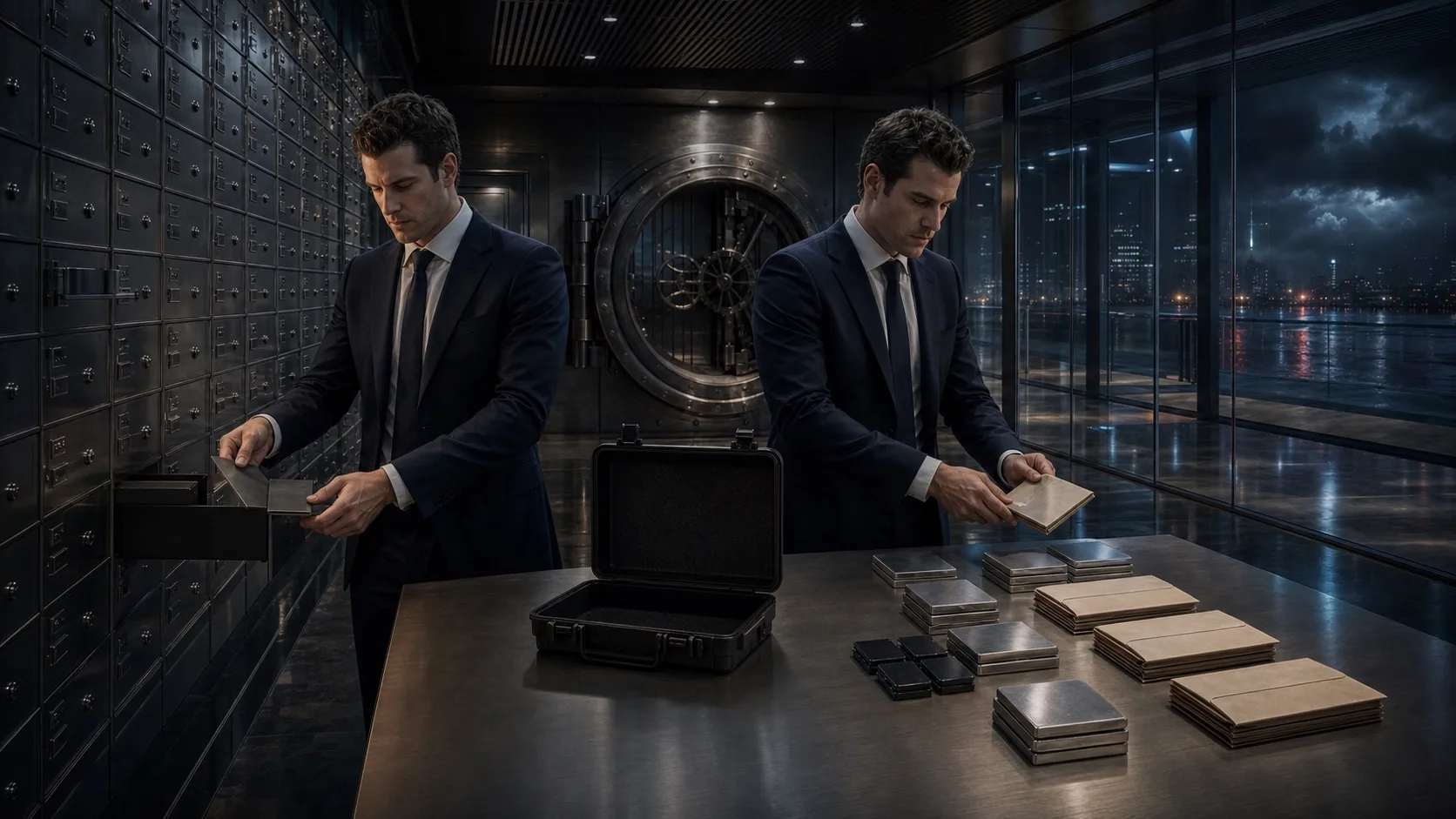
They do not just leave the keys lying around. By their own account they cut the private keys into pieces, encrypt them, and distribute them across bank vaults all over the country — paranoid, thorough, and in hindsight wise. And then they do the hardest thing of all: they hold on, for years, while the price swings violently up and down.
Gemini: revenge of the nerds
The brothers are too smart to simply sit and wait for a price to rise. They want to make crypto respectable — and to own the infrastructure of it. In 2014 they launch their own crypto exchange: Gemini, named after the constellation of the twins.
And their strategy is striking: where most crypto exchanges flee supervision for offshore islands, the Winklevii do the opposite. They deliberately build Gemini as the most rule-abiding exchange in America. They secure a New York licence, embrace regulators, and turn “we are the boring, safe, regulated option” into their entire brand. Their slogan becomes almost a life motto: “Ask for permission, not forgiveness” — the exact inverse of the Silicon Valley culture that had once robbed them.
Around 2017, when bitcoin shoots into the thousands of dollars, the world tips over. The millions they had hidden in pieces in bank vaults are now worth billions. The aggrieved losers from the Facebook film have become the world's first bitcoin billionaires. The underestimated twins had the longest breath of anyone.
The ETF that was refused
Not everything worked. For years the brothers tried to be the first to get a bitcoin ETF listed — a fund that would let ordinary investors buy bitcoin through their brokerage account. In March 2017 the US regulator, the SEC, rejected their application; a second attempt failed in 2018. The reason: in the SEC's view the bitcoin market was still too unregulated and too vulnerable to fraud.
It is a painful irony for the most rules-oriented players in the sector: they of all people got the “no”. Only years later, in 2024, would other parties finally get a bitcoin ETF through the gate. The Winklevii had been right — just too early.
The crack in the fairy tale
An honest story does not stop at the glory. Because the “we are the safe, regulated exchange” image took a serious dent — and the lesson that follows is exactly what this site is about.
Gemini offered a product called Gemini Earn: customers could lend out their crypto and earn interest on it. But in practice Gemini passed that crypto on to an external party, the lender Genesis. When the crypto market collapsed in 2022 and Genesis went under, hundreds of thousands of Earn customers were trapped: their balances — at the peak some $900 million to over a billion dollars — were frozen.
The aftermath was legal. The US securities regulator, the SEC, sued Gemini and Genesis, arguing that Earn was an unregistered security. New York's DFS and the state attorney general piled in. In the end Gemini reached a settlement in 2024: it promised to repay customers in full through the Genesis bankruptcy, plus tens of millions in fines and compensation. In early 2026 the SEC and Gemini dropped the lawsuit — noting that the Earn customers had by then recovered 100% of their balances.
Even the most ‘regulated’ exchange can put your money at risk the moment it leaves the building via an interest product.The lesson of Gemini Earn
So the ending was relatively good for the customers — but only after two years of uncertainty, bankruptcies and legal battles. That the brothers fought their way out of that crisis fits their story. That the crisis arose at all, at the company that had made “safety” its brand, is the warning.
What the twins prove
The Winklevoss story is the cheeriest in this series — no looted vault, no fugitive, no prison sentence. It is a story of patience, of being proved right in the face of ridicule, and of a bet few would have dared to take. That deserves to be celebrated.
But it also contains the most sobering lesson of all, and it applies even to the “good guys”. A strong brand, a real licence and the best intentions do not automatically protect you once your crypto goes into an interest product. The moment your balance is lent out by the exchange to a third party, you are no longer a custody customer — you are a creditor hoping that third party stays standing. That is precisely why Europe's MiCAR rules hammer on segregating client money and on crystal-clear disclosure of what happens to your holdings: is the exchange safeguarding it, or lending it out?
The twins who lost to Zuckerberg won in the long run. But even their story ends at the same question that runs beneath all of these: when you click ‘agree’ on an attractive yield — who is holding your coins at that moment, and what happens if that party falls?
Sources
$65M settlement (2008) & Facebook origins: Reuters. Kozinski “litigation must come to an end” (9th Circuit, 2011): CBS News, Above the Law. ~$11M into bitcoin → billionaires, ~1% of all bitcoin: The New York Times, Celebrity Net Worth. Bitcoin ETF rejected (2017, 2018): CoinDesk, CNBC. Gemini Earn / Genesis / NYAG $1bn returned + $37M fine: Fortune; SEC drops case, customers repaid 100% (2026): CoinDesk.